The Digital Dollar Project today announced the completion of a pilot study conducted in collaboration with The Western Union Company (Western Union), BDO Unibank, Inc. (BDO Unibank) in the Philippines, and support from Accenture. The pilot is the first deliverable in the Digital Dollar Project’s series of retail CBDC experiments.
The white paper: Retail Cross-Border Remittance Payments
The pilot’s findings are published in the white paper Retail Cross-Border Remittance Payments (August 2023). It explores how a CBDC could ease the problems retail customers face when sending money across borders. Today those payments are slowed by multi-party risk, limited interoperability and a lack of transaction transparency, and those problems fall hardest on un- and under-banked individuals and families.
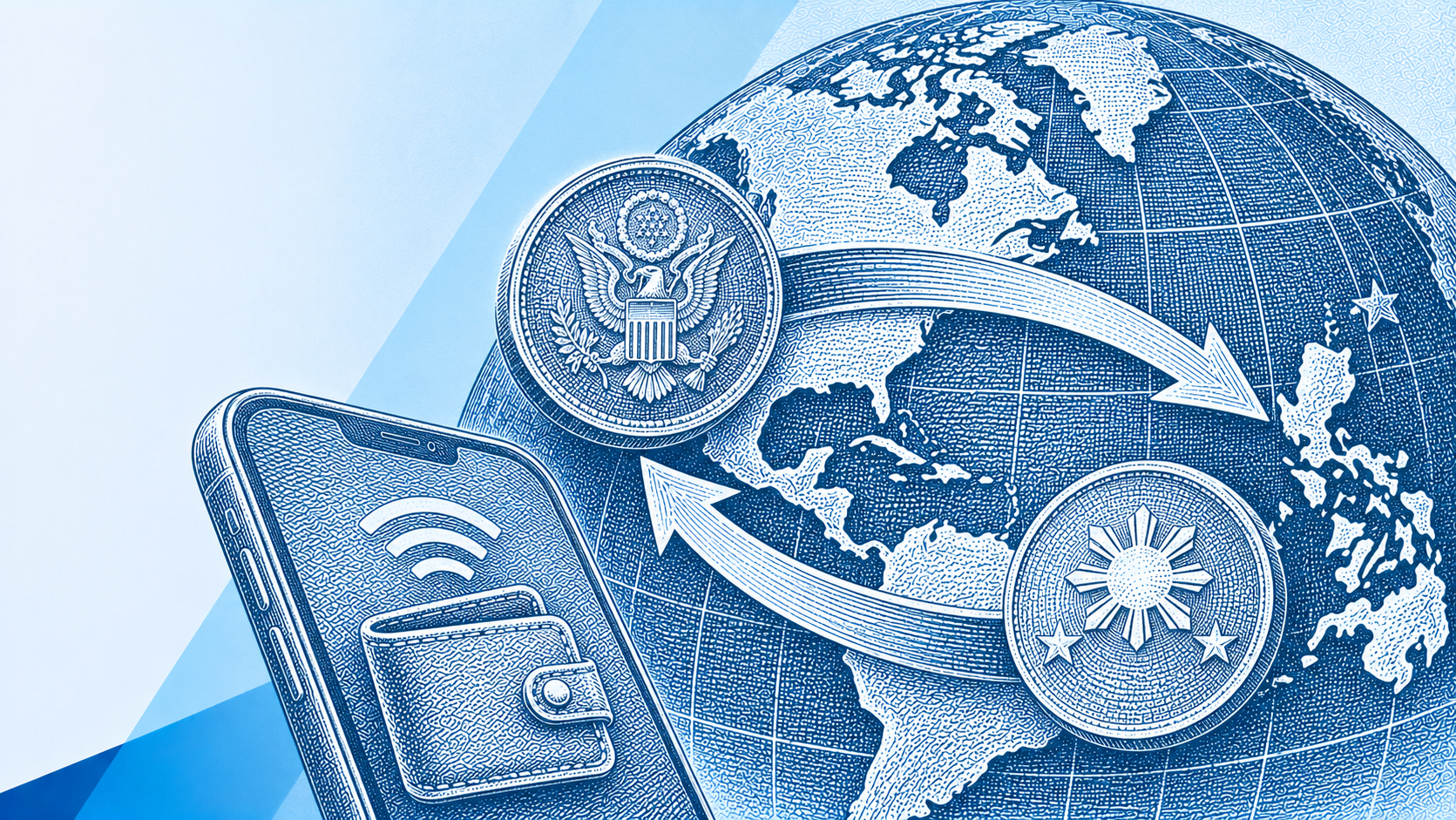
The study tested whether a simulated retail U.S. CBDC, or digital dollar, could improve remittances in the U.S.–Philippines corridor, one of the busiest corridors in the world. It ran in a sandbox on a shared, permissioned distributed ledger and is the first private sector-initiated experiment intended to inform the retail application of a potential U.S. CBDC.
What was tested
The pilot explored two process components:
- Issuance of CBDCs to financial institutions and their customers, to lay the architectural foundation for a CBDC-based cross-border payments ecosystem.
- Peer-to-peer remittances, to show the benefit to the end customer of using tokenized forms of the U.S. dollar and the Philippine peso.
Findings
The pilot settled a peer-to-peer payment in less than ten seconds, a significant improvement over most settlement mechanisms. A key driver was atomic settlement, which reduced counterparty risk and optimized liquidity through streamlined foreign exchange spot orders and multi-party settlement. The study identified four primary benefits of retail CBDCs for cross-border remittances:
- Reduced risk: instant settlement across multiple currencies reduces counterparty and credit risk for customers and their financial institutions.
- Optimized cost: value and message move in a single transaction, settled atomically, easing the cost of capital held in pre-funded accounts.
- Enhanced customer experience: a tokenized digital dollar makes money in digital form more accessible and portable for the unbanked and underbanked, and a verified digital wallet can help reduce fraud and failed transactions.
- Improved visibility: a permissioned ledger gives institutions and their customers a clear view of where a transaction stands, which bolsters customer trust.
Overall, the study concluded that rather than displacing established remittance providers, CBDCs present an opportunity to modernize their operations and expand financial access.
Policy considerations and next steps
The paper flags policy questions raised by the pilot’s design assumptions: retail use of central bank money for remittances, foreign holding of CBDCs, and the role of foreign exchange liquidity providers on distributed systems. It names three topics for further experimentation: inclusive identity attestation models, privacy for cross-border transactions, and multi-network cross-border interoperability.